1942 anti-Semitic riots
The Plot Against AmericaThe 1942 anti-Semitic riots mark the point at which political accusations become widespread violence in the novel’s alternate history. Beginning after sundown on October 12, the disturbances spread across eleven states despite martial law, curfews, and National Guard patrols. Federal troops were not able to bring them under control until about eight the following morning; by then, 122 American citizens had died.
Background and Outbreak
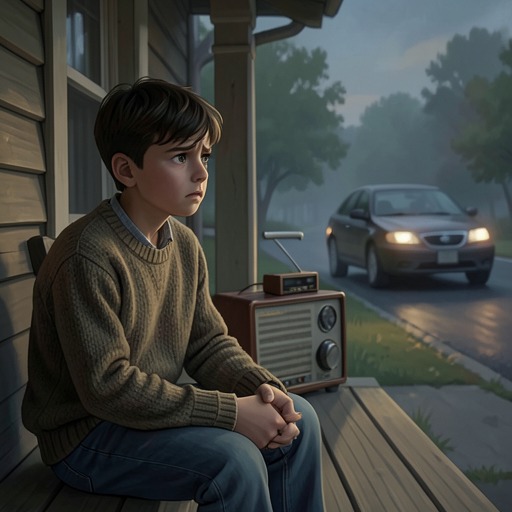
The immediate crisis followed reports from British intelligence that President Charles A. Lindbergh had deliberately ditched his plane at sea and been taken by German forces to a secret meeting with Adolf Hitler. The news reached the Roth household by radio at dinner. Philip’s mother quickly understood that the ensuing violence would target Jews, while the family’s opportunity to leave the country had already closed with the Canadian border. Fear was therefore not abstract: the political upheaval had narrowed the family’s choices even before the violence reached their neighborhood.
The riots unfolded under a government that had imposed emergency restrictions but failed to prevent attacks. Acting President Burton K. Wheeler responded by attributing responsibility to the British government and its American supporters, and then portrayed the unrest as the consequence of opponents’ accusations against Lindbergh. The official response thus turned the crisis into a contest over its meaning as well as public safety: the violence was directed at Jews, while the administration’s account displaced blame onto those challenging the government.
Blame, Conspiracy, and the Human Cost
The administration’s account deepened the crisis by converting the riots into an accusation against the people they targeted. Wheeler blamed British leaders and their American supporters, presenting criticism of Lindbergh as an offense against a nation in mourning. Law-enforcement agencies then described the violence as the work of local Jewish groups allegedly conspiring to weaken the country; of the 122 people killed, 97 were labeled Jewish provocateurs. The official narrative recast victims as instigators and treated a conspiracy theory as an explanation for the disorder.
Mayor Fiorello La Guardia publicly challenged that account. He identified hysteria, hatred, and fear—not a Jewish plot—as the forces driving the country toward violence, and rejected a renewed blood libel claiming that Jewish bakers in Poland had used the kidnapped Lindbergh child’s blood in Passover matzohs. In the novel, an old antisemitic fabrication resurfaces alongside contemporary claims of Jewish subversion, showing how political propaganda gives inherited prejudice a new target and an official-sounding vocabulary.
The violence also reaches beyond public claims and casualty totals into the life of the Roth family. During the riots, Selma Wishnow was killed while driving near Louisville; her burned-out car was found the next day beside a drainage ditch. Her son, Seldon, had already understood that she was dead when he called the Roth household, though he knew little of the wider crisis. The family’s initial attempts to reassure him could not undo what had happened. Her death makes the consequences of the riots intimate: the violence that authorities blamed on Jews also takes a mother from a child who had already lost his father.
Community Preparedness
The mobilization in Newark grew from a series of public confrontations surrounding Walter Winchell’s campaign. After losing his radio microphone and newspaper column, Winchell carried his anti-fascist appeal from New York City into industrial towns in New England. In South Boston, hostility toward him escalated into an attack, while the local police did not promptly intervene. The incident sharpened fears that unrest could spread to other cities, including Newark, where a large Jewish neighborhood bordered working-class communities in which anti-Semitic organizing had found support.
Rabbi Joachim Prinz and five other prominent Newark Jews formed the Newark Committee of Concerned Jewish Citizens to prepare for possible violence and seek cooperation from public authorities. The committee met first with Newark’s police, fire, and public-safety officials, then with New Jersey’s governor, state police superintendent, and National Guard commander. Attorney General David T. Wilentz also attended, and the committee reported his assurance that assaults on Newark Jews would be prosecuted. When it asked Rabbi Lionel Bengelsdorf for a meeting in Washington, he treated the danger as a local rather than federal matter and directed the group back to city and state officials.
A separate effort addressed the possibility that official protection might prove inadequate. Longy Zwillman assigned Bullet Apfelbaum to recruit young men for a volunteer force called the Provisional Jewish Police. The committee’s work sought security through civic institutions; Zwillman’s initiative prepared a neighborhood force of its own. Together, the two responses show how the threat of anti-Semitic violence pushed Newark’s Jewish community to combine appeals to public authorities with preparations for local self-defense.
Public Mourning and the Crisis of Meaning
Before the riots began, New York had turned Walter Winchell’s assassination into a public day of mourning. On October 6, 30,000 people streamed through Pennsylvania Station to view his flag-draped coffin, while mourners elsewhere in the city wore black buttons asking, “Where is Lindbergh?” At noon, a citywide minute of silence followed; Mayor Fiorello La Guardia recited both the Lord’s Prayer and the Jewish prayer for the dead, and a police honor guard escorted the funeral cortege to Temple Emanu-El. The ceremony gathered political, labor, and civil-liberties figures around Winchell’s death, even as police monitored pro-government demonstrations in Yorkville. Six days later, violence spread across eleven states. This sharp shift—from a highly organized civic memorial to attacks that federal troops could not quell until morning—underscores how quickly the public language of mourning and political accusation gave way to mass danger, while the question on the buttons remained unanswered.